
Sunday 16 September we leave Stirling and Scotland. Sadly because a little bit of my heart is always there. I first drove over the border in 1979 in my trusty Morris Minor, beetling up to Youth Hostels all over Scotland. My last visit in 2015 took me, amongst other places, to the Shetland Islands. And there have been several Scottish returns in between.

We skirted Edinburgh, running parallel to the Firth of Forth towards the east coast and an overdue loo-stop at Dunbar. Then south-east, skirting much-contested Berwick-on-Tweed to arrive at The Holy Isle – or Lindisfarne. I first visited the island in 2010 when I was house-sitting in York and was looking forward to a return visit with Russ.
Our arrival timed to catch the retreating tide, we drove over the causeway about 11.30am, tea-ed up and set out to walk across the flats to the 16th century Lindisfarne Castle, modified by Edward Luytens in the arts and crafts style at the beginning of the twentieth century for owner Edward Hudson. The castle is undergoing a major restoration to combat the ravages of wind and sea – but the result for us was that we could wander through unencumbered by the usually present furniture – meaning it was much easier to see the interior structure. Also there were fewer people there – probably on account of the restoration work.
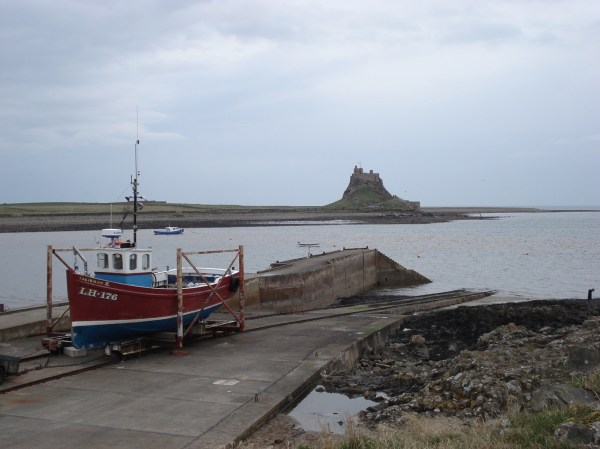
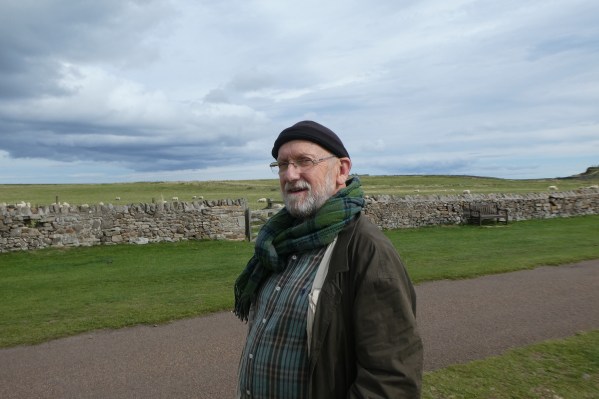
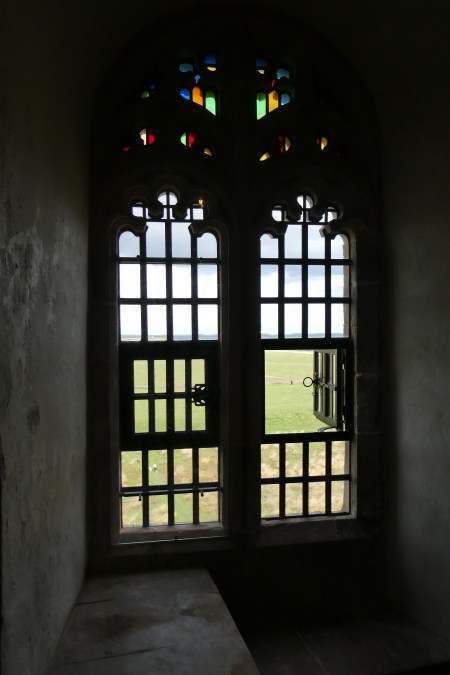
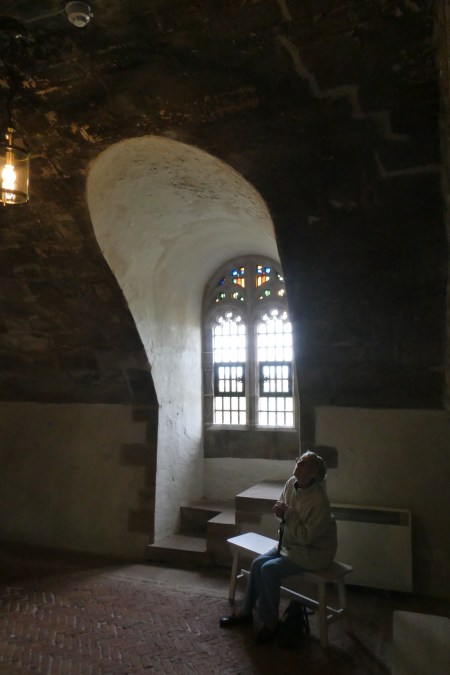
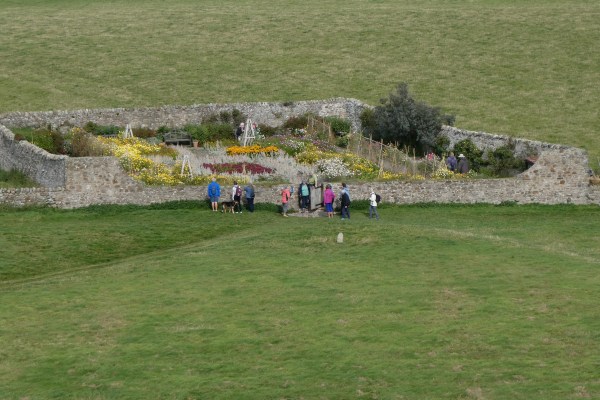
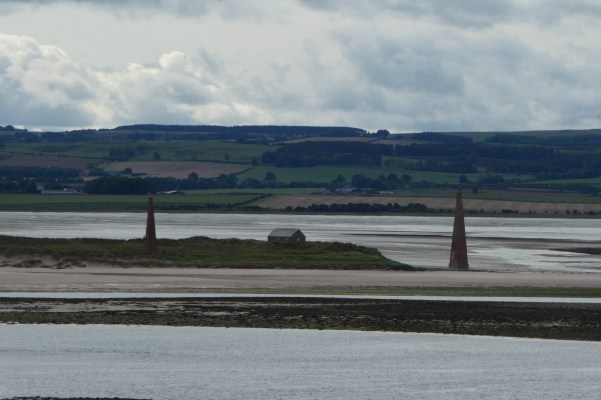
We looked back to the village and priory; in a seawards direction to the old lime kilns; north (I think) to Gertrude Jekyll’s little walled garden and east (maybe) to the intriguing channel markers. There too, on the sandy flats, were – so the NT man said – 600 seals basking altogether. We could see them, looking just like rocks.
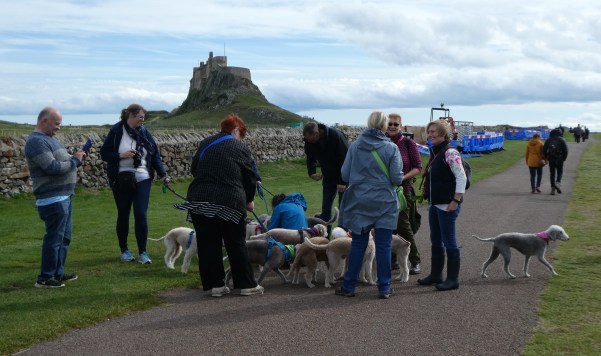
I didn’t mention the Bedlington terrier party – heaven knows how many BTs with their owners all on a day out. It was the funniest thing – the owners all chatting and the dogs definitely getting to know one another better!!

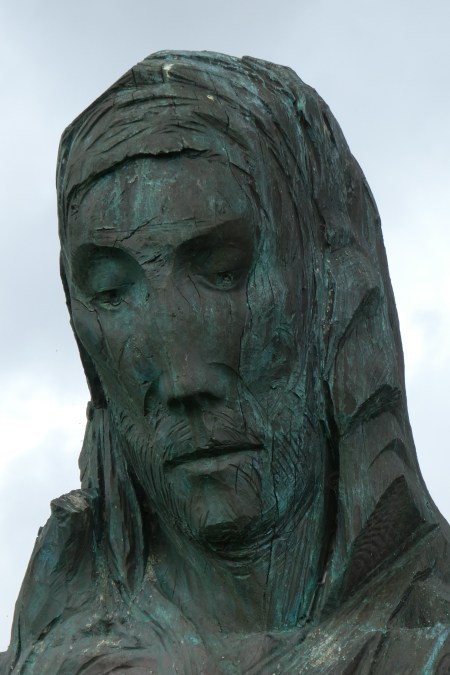
Back in the direction of the little harbour and village to visit the priory. The monastery of Lindisfarne was founded by Irish monk Saint Aiden, who had been sent from Iona off the west coast of Scotland and founded the priory before the end of 634. The priory church that we see today, along with part of the domestic accommodation, was built in the 12th century and extended in the 13th. The whole complex is hauntingly beautiful and surprisingly large. This remote, water-bound outpost became one of the most important religious and political centres in Anglo-Saxon England.
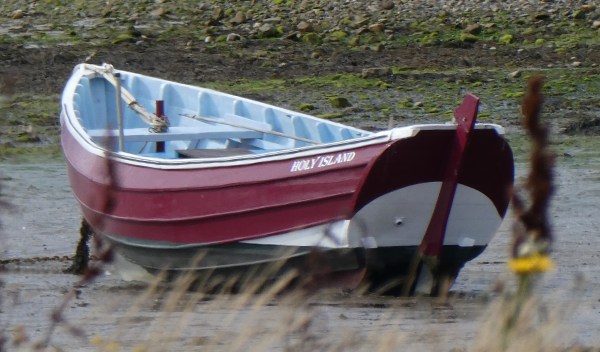
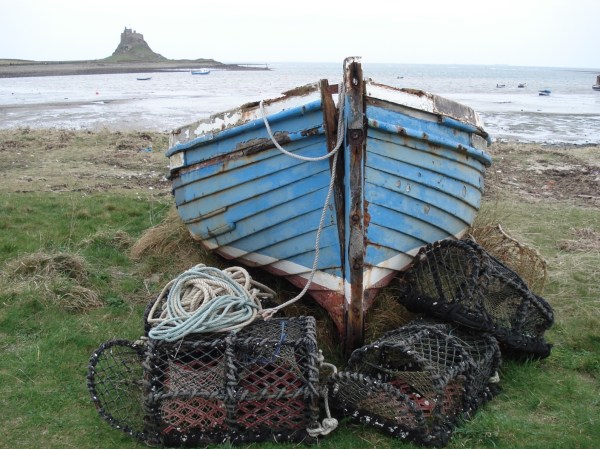
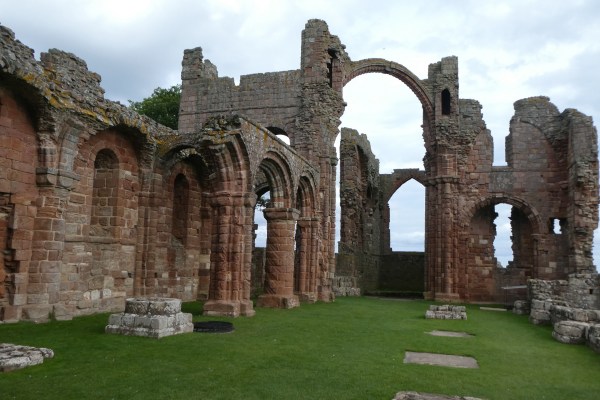
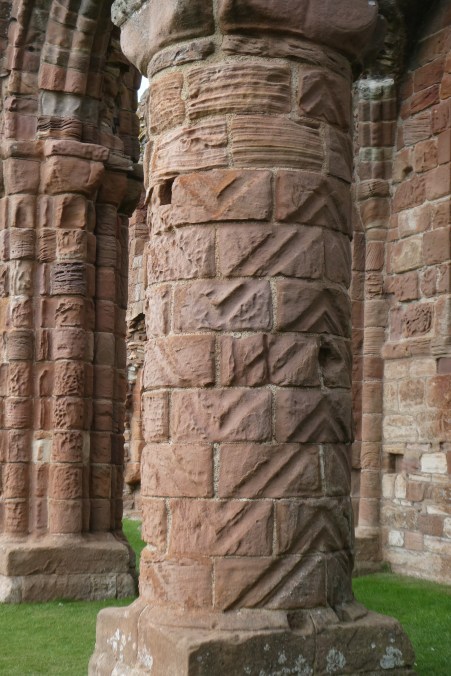
On our way back to the car park we bought fresh raspberries grown on the island!
Back across the causeway before access would be cut off post-6.00pm and a drive further south to Alnwick where we were to stop the night in the Youth Hostel.
 JaneRussell journeys